


18
2026
-
03
Excavator vs. Skid Steer vs. Tractor: Which Hydraulic Driver is Right for Your Project?
In the world of construction, farming, and fencing, time is money, and manual labor is increasingly hard to find. Hydraulic post drivers have emerged as the go-to solution for quickly and safely sinking posts into the ground. However, with a variety of carrier machines available—from excavators and skid steers to tractors—choosing the right attachment can be confusing. Industry experts break down the three main types of hydraulic drivers and the specific applications where each one shines.
Hydraulic post and pile drivers work by using pressurized fluid to generate powerful impact force or vibration, transferring that energy to a post or pile to drive it into the soil -10. While the basic principle is similar, the carrier machine determines the attachment's design, capabilities, and ideal use case. Understanding these differences is essential for contractors and landowners looking to maximize their equipment investment.
The Three Main Types of Hydraulic Drivers
1. Excavator-Mounted Hydraulic Post Driver
Excavator-mounted drivers leverage the machine's articulated arm and hydraulic system to provide unparalleled reach and precision. These attachments typically use high-frequency vibration or impact to drive posts, and they can be positioned exactly where needed thanks to the excavator's boom and dipper .
Operating Principle: Connects to the excavator's auxiliary hydraulics, using high-frequency vibration (up to 65Hz in advanced models) or impact to penetrate the ground .
Key Advantage: Exceptional reach and the ability to work on uneven terrain or in confined spaces. Many models feature 360-degree rotating arms, allowing precise placement without repositioning the carrier machine .
Best Applications: Heavy-duty construction, bridge foundations, deep foundation work, and mining projects. Ideal for scenarios requiring precise placement in hard-to-reach areas .
2. Skid Steer Loader Post Driver
Skid steer post drivers are designed for speed and maneuverability on job sites. These attachments typically use an impact mechanism, delivering rapid blows to drive posts into the ground. The Texas Post Driver Series 500, for example, delivers up to 500 ft-lbs of impact energy and can handle posts up to 9 inches in diameter, including T-posts, pipe, wood, and even railroad ties .
Operating Principle: Hydraulic impact mechanism with blow rates typically ranging from 500 to 900 beats per minute, requiring oil flow of 9.5-16 gallons per minute .
Key Advantage: Universal quick-attach systems make these drivers easy to install and remove, allowing the skid steer to switch between tasks rapidly. No electrical hookups are required .
Best Applications: Fence installation, ranch work, farm operations, and commercial projects. Perfect for operations where the same machine needs to dig, load, and drive posts throughout the day .
3. Tractor-Mounted Pile Driver
Tractor-mounted piling machines represent the heavy-duty end of the spectrum. These are often more substantial systems designed for deep foundation work rather than simple fence posts. They combine the mobility of a tractor with specialized piling attachments for demanding geotechnical applications .
Operating Principle: Powered by the tractor's hydraulic system or PTO, these machines can utilize various driving mechanisms including hydraulic impact, vibratory systems, or auger drilling .
Key Advantage: High driving force suitable for large-diameter and deep piles. Effective in challenging ground conditions including rocky or compacted soils, with precise control over pile placement and depth .
Best Applications: Heavy-duty foundation work for commercial buildings, bridge piers, deep foundations, road and embankment construction, and marine projects. Essential for reaching stable load-bearing strata at significant depths .
Comparison at a Glance
The following table outlines the key differences between these three types of hydraulic drivers:
| Feature | Excavator-Mounted Driver | Skid Steer Loader Driver | Tractor-Mounted Pile Driver |
|---|---|---|---|
| Primary Strength | Reach and precision placement | Speed and maneuverability | Raw power for deep foundations |
| Typical Mechanism | High-frequency vibration | Impact hammer (500-900 bpm) | Hydraulic impact, vibratory, or auger |
| Mobility | Tracked, excellent on rough terrain | Wheeled or tracked, highly agile | Wheeled, good for open sites |
| Post/Pile Size Capacity | Up to 7+ tons load capacity (Pro models) | Up to 9" diameter posts | Large-diameter deep piles |
| Key Feature | 360° rotating arms for tight spaces | Universal quick attach | Interchangeable piling heads |

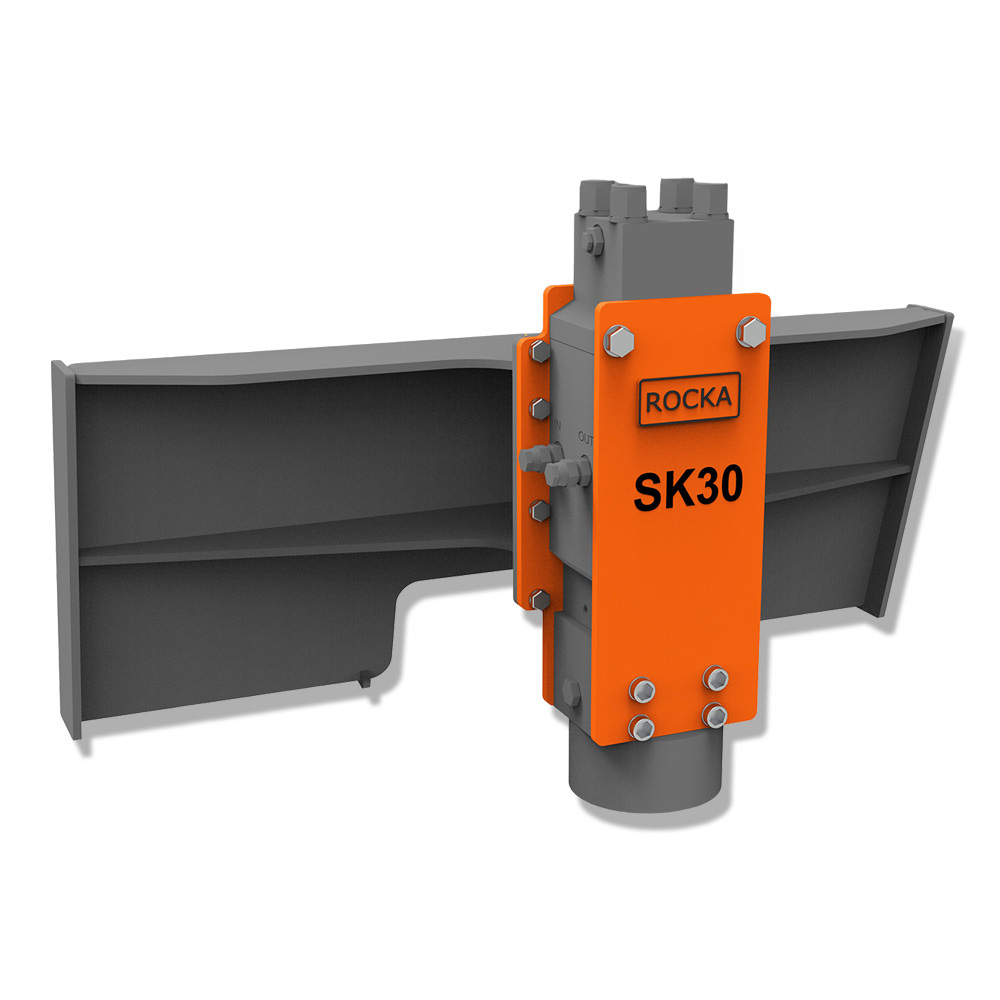


Application Guide: Matching the Machine to the Project
Choosing the right driver depends on the specific requirements of your project. Here is a breakdown of which machine is best suited for common applications:
For Commercial Fencing and Ranch Work
Best Choice: Skid Steer Post Driver
For farms and ranches where miles of fence need to be installed, the skid steer post driver is the efficiency king. These machines can rapidly cycle through posts, driving them in fractions of the time required for manual labor . The Texas Post Driver Series 500, for instance, is built specifically for rugged ranch conditions and can handle everything from T-posts to heavy wooden fence posts . The ability to quickly attach and detach the driver means the same skid steer can be used for loading feed, moving materials, or grading between fencing tasks.
For Construction Sites with Tight Access
Best Choice: Excavator-Mounted Driver
Urban construction sites and renovation projects often require working in confined spaces where maneuverability is limited. Excavator-mounted vibro hammers excel in these environments, with articulated arms and 360-degree rotating capability that allow operators to place posts precisely without moving the entire machine . These attachments are particularly valuable for shoring and excavation support in tight urban lots where adjacent structures must be protected.
For Heavy Infrastructure and Deep Foundations
Best Choice: Tractor-Mounted Pile Driver
When the project involves bridge construction, commercial building foundations, or marine installations, tractor-mounted pile drivers are the only choice. These machines deliver the high driving force necessary to penetrate dense or rocky soils and reach competent load-bearing strata . They are essential for installing steel H-piles, concrete piles, or sheet piles for bridge supports and retaining walls in highway construction.
For Specialty Applications
Vineyards and Orchards: Skid steer drivers excel at installing trellis systems quickly and consistently .
Road Sign Installation: Excavator-mounted drivers allow crews to install signs along highways without blocking traffic for extended periods .
Temporary Event Structures: Tractor-mounted helical pile drivers can rapidly install and remove foundations for stages and temporary facilities .
Key Considerations for Equipment Selection
Before investing in a hydraulic post or pile driver, contractors and landowners should evaluate several factors:
Existing Fleet: The most economical choice is often the attachment that fits machinery you already own .
Soil Conditions: Conduct soil tests to determine whether impact, vibration, or static pressing will be most effective .
Typical Post Size: Match the driver's capacity to the posts you commonly install—skid steer drivers typically handle up to 9-inch diameters, while tractor-mounted systems can manage much larger piles .
Mobility Requirements: Consider whether your job sites require the reach of an excavator, the speed of a skid steer, or the raw power of a tractor.
Hydraulic Compatibility: Ensure your carrier machine can supply the required oil flow and pressure for the attachment (typically 9.5-16 GPM for standard post drivers) .
Related News
2026-03-16

CONTACT US
Vicent
WhatsApp/Wechat/Cell: 86 18053581623
Email:haofengling512@gmail.com
info@rockageattachments.com
Yantai Rocka Machinery Co., Ltd
Address: No.26 Taoyuan Rd, Dongting Industrial Park, Fushan District,
Yantai, Shandong, China 265500
www.rockahammer.com
ROCKA MACHINERY